



Polarization : 편광
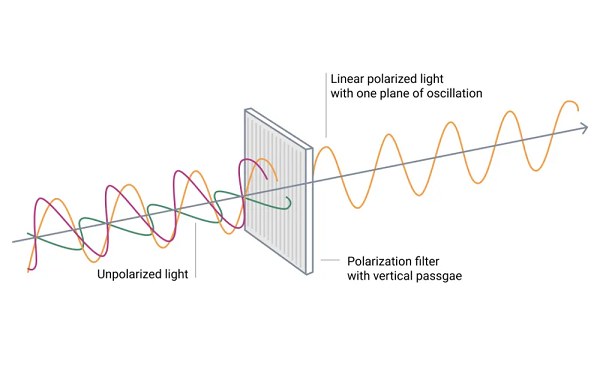
적외선 감지의 맥락에서 편광은 적외선 전자기파의 전기장 벡터의 방향을 의미합니다. 적외선 복사가 표면과 상호작용하거나 물질을 통과할 때, 관찰 대상의 표면 특성, 물질 조성 및 기하학적 형상에 따라 그 편광 상태가 변할 수 있습니다. 적외선 감지에서는 일부 적외선 검출기가 편광에 따라 감도가 달라질 수 있으므로, 매우 저예산의 적외선 강도 기반 측정에서는 편광이 문제를 일으킬 수 있습니다.
예를 들어, 적외선 센서가 고도로 편광된 적외선을 측정한 후에도 여전히 표적을 향한 상태에서 축을 기준으로 90° 회전하면 서로 다른 판독값이 나와 반복성이 매우 낮아질 수 있습니다. 이를 완화하기 위해 적외선 장비의 설계 시 검출기, 필터 및 렌즈에 특별한 주의를 기울여야 하며, 필요에 따라 탈편광 필터의 추가 사용을 고려해야 합니다.
그러나 편광은 일부 특수 응용에서는 측정 대상이 될 수도 있습니다. 예컨대 편광에 민감한 적외선 센서가 입사 적외선의 편광 방향과 정도를 감지·분석할 수 있다면, 유사한 열 방출을 가지는 표면이라도 반사 특성이 다른 표면을 구분할 수 있습니다. 이는 서로 다른 질감이나 재료가 적외선을 다르게 편광시키기 때문에 표면 이상, 결함 또는 오염 물질을 식별하는 데 도움이 됩니다.
Polarization in the context of infrared sensing refers to the orientation of the electric field vector of infrared electromagnetic waves. When infrared radiation interacts with surfaces or passes through materials, its polarization state can change due to surface properties, material composition, and geometrical features of the object being observed. In infrared sensing, polarization can be challenging for very low-budget infrared intensity-based measurements, as some infrared detectors can have polarization cross-dependency.
For instance, if an infrared sensor measures highly polarized infrared radiation and is then turned around its axes by 90° while still pointing at the target, it may result in different readings, demonstrating very low repeatability. To mitigate this, detectors, filters, and lenses must receive special attention in the design of the infrared instrument, and additional utilization of depolarization filters might need to be considered.
However, polarization can also be a measurement of interest in some niche applications. For instance, when an infrared sensor sensitive to polarization can detect and analyze the direction and degree of polarization of the incident infrared radiation, it allows for the differentiation between surfaces with varying reflective properties, even if they have similar thermal emissions. This enables the identification of surface anomalies, defects, or contaminants, as different textures or materials will polarize infrared light differently.