



Lambert’s Cosine Law : 람베르트 코사인 법칙
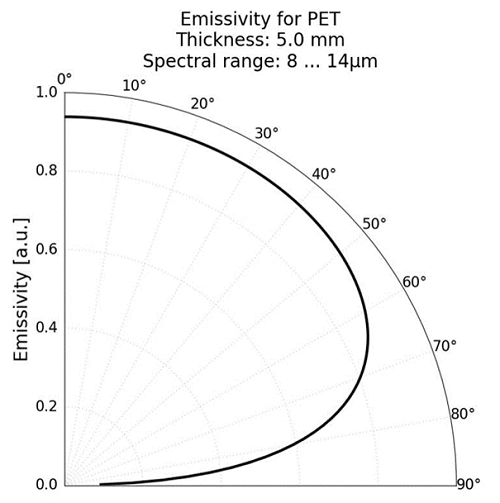
람베르트의 코사인 법칙은 표면에서 방출되는 복사 강도가 방출 방향과 표면 법선 사이 각도의 코사인에 비례함을 설명합니다. 적외선 측정의 맥락에서 이 법칙은 표면에 수직으로 관찰할 때 방출되는 적외선이 가장 강하고 각도가 커질수록 약해진다는 것을 의미합니다. 이 원리는 적외선 온도계 판독값을 정확하게 해석하는 데 중요하며, 측정된 복사의 표면 유효 방사율과 강도에 영향을 미칩니다. 적외선 온도계를 사용해 온도를 측정할 때는 판독값이 표면의 실제 온도를 정확히 나타내도록 측정 각도를 고려하는 것이 중요합니다.
수직에서 크게 벗어난 각도로 측정하면 검출되는 복사 강도가 낮아져 측정 설정에서 적절히 보정하지 않으면 실제 온도를 과소평가할 수 있습니다.
Lambert’s cosine law explains that the intensity of radiation emitted by a surface is directly proportional to the cosine of the angle between the direction of the emitted radiation and the surface normal. In the context of infrared measurements, this law means that the emitted infrared radiation is strongest when observed perpendicular to the surface and weakens as the angle increases. This principle is crucial for accurately interpreting infrared thermometer readings, as it affects the apparent emissivity and intensity of the measured radiation. When using an infrared thermometer to measure temperature, it is important to consider the angle of measurement to ensure that the readings accurately represent the surface’s true temperature.
Significant deviations from perpendicular angles can result in lower detected radiation intensity, which could lead to underestimation of the actual temperature if not properly adjusted for in the measurement setup.