



Infrared Camera : 적외선 카메라
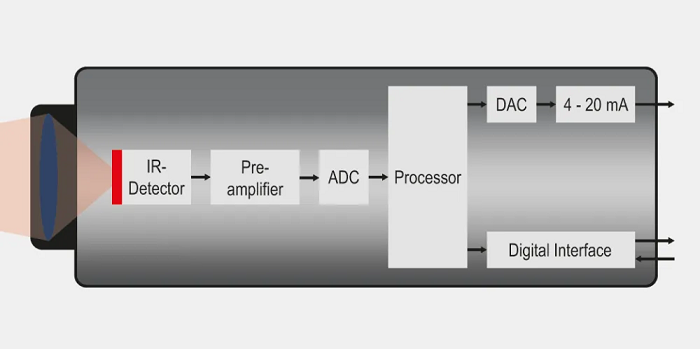
가시광 스펙트럼을 이용해 영상을 생성하는 일반적인 가시광 카메라와 달리, 열화상 카메라는 절대영도 이상의 모든 물체가 열 복사 에너지를 방출한다는 원리에 기반하여 적외선 스펙트럼에서 동작합니다. 이러한 기본 원리를 통해 적외선 카메라는 장면 내의 열 차이를 감지하고 시각화할 수 있습니다.
적외선 카메라에서는 광학 렌즈 시스템이 물체에서 방출되는 열 복사로 인한 온도 변화를 검출기 배열 위에 집속합니다. 이 배열은 다수의 픽셀로 구성되어 있으며, 각 픽셀은 장면 내의 특정 영역에 대응합니다. 각 픽셀이 감지한 적외선 복사 강도는 해당 위치에서의 물체 온도를 나타냅니다. 사용되는 적외선 파장 대역에 따라, 이러한 카메라의 센서 검출기는 볼로미터나 적외선 광검출기와 같은 서로 다른 기술을 사용할 수 있습니다.
적외선 카메라의 시야 내에 있는 물체에서 방출된 적외선 복사가 검출기에 도달하면, 비냉각 볼로미터를 사용하는 대부분의 비냉각 적외선 카메라에서는 임피던스와 같은 센서 재료의 전기적 특성이 변화합니다. 볼로미터의 흡수 소자는 일반적으로 온도 변화에 따라 전기 저항이 크게 변하는 재료로 만들어집니다. 흡수 소자의 온도가 상승하면 그에 따라 전기 저항도 변합니다. 한편, 일부 적외선 카메라는 적외선 빛을 전기 전류로 변환하는 반도체 재료를 사용하기도 합니다. 이러한 장치는 광자가 포토다이오드 표면에 입사할 때 전자–정공 쌍을 생성하는 양자 효과에 기반해 동작합니다. 이러한 적외선 장치는 낮은 노이즈를 얻기 위해 매우 낮은 온도로 냉각되어야 하므로, 유지보수 요구 사항이 크고 비용 또한 높아집니다.
카메라의 전자 회로는 이러한 신호를 증폭하고 디지털화한 뒤 처리하여 시각적인 영상을 생성합니다. 대부분의 적외선 카메라에서는 셔터 메커니즘이 주기적으로 센서 배열을 교정하여, 오프셋과 비균일성을 보정함으로써 정확한 복사 강도 측정을 보장합니다.
카메라 내부의 소프트웨어는 디지털화된 신호에 교정 데이터를 적용해 적외선 복사 강도를 온도 값으로 변환합니다. 이러한 변환을 통해 정밀한 비접촉식 온도 측정이 가능해지며, 설정된 임계값을 기준으로 온도 제어, 온도 분석, 알람 트리거 기능을 수행할 수 있습니다.
적외선 카메라는 하나의 규격으로 모든 용도를 충족하지는 않습니다. 다양한 응용 요구와 예산 조건에 맞추어, 서로 다른 분광 범위, 측정 범위, 속도, 감도, 해상도를 갖는 제품들이 제공됩니다. 예를 들어, 일부 카메라는 특정 산업 응용에 매우 유용한 장파장 적외선(LWIR)을 감지하도록 설계되어 있으며, 다른 카메라는 서로 다른 환경 조건에 더 적합한 중파장 적외선(MWIR)에 최적화되어 있을 수 있습니다. 이러한 유연성 덕분에, 각기 다른 요구에 맞는 적외선 카메라를 선택할 수 있습니다.
적외선 카메라의 성능과 기능은 여러 가지 요소에 의해 결정됩니다. 분광 범위(spectral range)는 카메라가 감지할 수 있는 적외선 스펙트럼의 특정 영역을 의미하며, 이는 다양한 응용 분야에 대한 적합성에 직접적인 영향을 미칩니다. 측정 범위(measurement range)는 카메라가 정확하게 측정할 수 있는 온도 범위를 정의합니다. 속도(speed)는 카메라가 영상을 얼마나 빠르게 취득하고 처리할 수 있는지를 의미하며, 빠르게 움직이는 물체를 다루거나 실시간 모니터링이 필요한 응용 분야에서 매우 중요합니다. 감도(sensitivity)는 미세한 온도 차이를 감지할 수 있는 카메라의 능력을 나타내며, 고정밀 응용에서 필수적인 요소입니다. 해상도(resolution)는 열 영상의 선명도와 세부 표현 능력을 결정하며, 해상도가 높을수록 보다 정밀하고 정확한 온도 데이터를 제공합니다.
특정 응용 분야에 적합한 적외선 카메라를 선택하기 위해서는 사용 목적에 따른 구체적인 요구 사항과 제약 조건을 고려하는 것이 필수적입니다. 산업용 응용에서는 환경 조건, 요구되는 측정 정확도, 그리고 측정해야 할 온도 범위와 같은 요소들이 중요합니다. 또한 냉각식 적외선 카메라와 비냉각식 적외선 카메라 중 어떤 방식을 선택하느냐에 따라 성능과 비용에 큰 차이가 발생할 수 있습니다. 극저온 냉각 시스템을 사용해 감도와 해상도를 향상시키는 냉각식 카메라는 구조가 복잡하고 비용이 높지만, 까다로운 응용 분야에서는 뛰어난 성능을 제공합니다. 반면 비냉각식 카메라는 비용 효율성과 내구성이 뛰어나 보다 폭넓은 응용 분야에 적합합니다.
Unlike conventional visible light cameras that create images using the visible spectrum, thermal cameras operate in the infrared spectrum because all objects above absolute zero temperature emit thermal radiation energy. This fundamental principle allows infrared cameras to detect and visualize heat differences in a scene.
In an infrared camera, an optical lens system focuses thermal variations from the thermal emissions onto a detector array. This array consists of numerous pixels, each corresponding to a specific area in the scene. The intensity of infrared radiation detected by each pixel indicates the object’s temperature at that location. Depending on the infrared wavelength spectrum being used, the sensor detectors in these cameras may utilize different technologies, such as bolometers or infrared photodetectors.
When infrared radiation from objects within the infrared camera’s field of view strikes the detector, it changes the electrical properties of the sensor material, such as impedance, in most uncooled infrared cameras, which rely on uncooled bolometers. The absorbing element of bolometers is typically made of a material whose electrical resistance changes significantly with temperature. As the temperature of the absorbing element increases, its electrical resistance changes. In other cases, infrared cameras use semiconductor material that converts infrared light into an electrical current. Those operate based on the quantum effect, where photons incident on the photodiode’s surface generate electron-hole pairs. These infrared devices must be cooled to very low temperatures to achieve low noise, requiring more maintenance and higher costs.
The camera’s electronics amplify, digitize, and process these signals to generate a visual image. In most infrared cameras, a shutter mechanism periodically calibrates the sensor array by correcting for offset and non-uniformity, ensuring accurate intensity measurements.
The software within the camera processes the digitized signals by applying calibration data to translate the infrared radiation intensity into temperature values. This translation allows for precise non-contact temperature measurements, enabling temperature control, temperature analysis, and alarm triggering based on predefined thresholds.
Infrared cameras are not one-size-fits-all. They are available with various spectral ranges, measurement ranges, speeds, sensitivities, and resolutions, tailored to a wide range of application requirements and budget constraints. For instance, some cameras are designed to detect long-wave infrared radiation, which is invaluable for certain industrial applications, while others might be optimized for mid-wave infrared radiation, which is better suited for different environmental conditions. This adaptability ensures that there’s an infrared camera for every need.
The performance and capabilities of an infrared camera are determined by several factors. Spectral range refers to the specific portion of the infrared spectrum the camera is sensitive to, which impacts its suitability for different applications. Measurement range defines the range of temperatures the camera can accurately measure. Speed refers to how quickly the camera can capture and process images, critical for applications involving fast-moving objects or real-time monitoring. Sensitivity denotes the camera’s ability to detect minute temperature differences, which is essential for high-precision applications. Resolution determines the clarity and detail of the thermal images, with higher resolutions providing more detailed and accurate temperature data.
To select the appropriate infrared camera for a specific application, it is essential to consider the specific needs and constraints of the use case. For industrial applications, factors such as environmental conditions, required measurement accuracy, and the specific temperatures to be measured are critical. Additionally, the choice between cooled and uncooled infrared cameras can impact performance and cost. Cooled cameras, which use a cryogenic cooling system to enhance sensitivity and resolution, are more expensive and complex but provide superior performance in demanding applications. Uncooled cameras, on the other hand, are more cost-effective and robust, making them suitable for a broader range of applications.