



Calibration : 교정
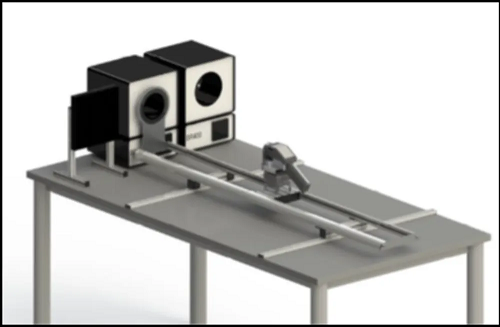
교정(Calibration)이란 시험 대상인 적외선 온도계의 표시값과, 특정 온도에서 교정 표준기가 나타내는 지시값 사이의 관계를 관련 불확도와 함께 규명하는 과정을 의미합니다. 과거에는 이 과정이 표시값 보정을 위한 규정 설정이나 교정 곡선을 작성하는 작업과 명확히 구분되지 않는 경우가 많았습니다.
필수적인 교정 주기에 대한 일반적인 규격이나 권장 사항은 존재하지 않으며, 이는 장치의 사용 빈도, 주변 환경 조건, 사용자 요구 사항 등에 따라 달라집니다. 따라서 교정 주기는 시험 장비에 대한 품질 관리 체계의 일부로 정의되어야 합니다. 보다 가혹한 환경 조건에서는 장치의 점검과 교정을 더 자주 수행해야 할 수도 있습니다. 예를 들어, 장시간 높은 주변 온도에 노출되면 검출기 감도에 영향을 줄 수 있으며, 먼지나 증기는 광학계의 투과율을 저하시킬 수 있습니다.
적외선 온도계는 조정 및 교정을 위해 온도가 정확히 알려진 복사를 발생시키는 교정용 방사체(calibration radiator)를 사용하여 교정됩니다. 교정 불확도를 낮추기 위해서는 교정 방사체가 생성하는 복사 온도를 가능한 한 정확하게 알고 있어야 합니다. 교정원의 복사 온도를 결정하는 한 가지 방법은 접촉식 온도계를 사용해 교정원의 실제 온도를 측정하고, 그 방사율을 산정하는 것입니다. 또 다른 방법으로는 전달 표준 복사 온도계(Transfer Standard Radiation Thermometer, TSRT)를 사용해 복사 온도를 직접 측정하는 방식이 있습니다.
국가 계량 기관은 국제온도눈금 1990(ITS-90)에 추적 가능하며 매우 작은 불확도를 갖는 고정밀 흑체 방사체를 보유하고 있습니다. 이러한 흑체 방사체는 전달 표준 복사 온도계(TSRT)를 교정하는 데 사용되며, 이렇게 교정된 TSRT는 다시 교정 실험실에서 교정원을 교정하는 데 활용됩니다. 이후 이 교정원이 시험 대상인 적외선 카메라나 파이로미터를 직접 교정하는 데 사용됩니다.
측정 기하 조건은 광원 크기 효과(Size-of-Source Effect)로 인해 측정값에 영향을 미칠 수 있으므로, 교정은 일반적으로 특정하게 정의된 기하 조건(방사원의 거리와 개구 직경)을 기준으로 수행됩니다. 이 정보는 광학 해상도 값, 즉 거리 대비 스폿 크기 비(Distance-to-Spot ratio, D:S)와 혼동해서는 안 됩니다. D:S 값은 교정 기하 조건을 기준으로 할 때, 측정 대상의 크기가 어느 수준에서 원래 신호의 90%로 감소하는지를 나타냅니다. 100% 신호 값은 교정 기하 조건에 해당하며, 이는 동일한 거리에서 D:S 값으로부터 계산되는 것보다 항상 더 큰 측정 스폿 직경을 규정합니다.
환경 조건 측면에서도 유리한 측정 환경을 조성해야 합니다. 실험실의 온도와 습도는 제조사가 지정한 교정 주변 온도 및 습도 조건(일반적으로 23 °C ± 5 °C, 상대습도 50% ± 30%)과 최대한 일치하도록 유지해야 합니다. 주변 온도의 변화율은 분당 0.1 K 이하로 유지해야 하는데, 이는 많은 측정 장치와 방사원이 온도 변화에 민감하게 반응하기 때문입니다. 또한 방사원, 특히 패널형 방사체는 공기 흐름에 민감하므로, 기류가 발생하지 않도록 주의해야 합니다.
실험실의 주변 온도와 다른 표면 온도를 가진 장비는, 교정용 흑체와 개구부에서 고온 또는 저온 표면의 반사가 발생하거나 적외선 카메라의 시야(Field of View) 내로 직접적인 간섭 복사가 유입되지 않도록 배치해야 합니다. 또한 전자기장, 기계적 진동 및 충격과 같은 영향 요인은 제조사가 규정한 허용값보다 충분히 낮은 수준으로 유지되어야 합니다.
적외선 열화상 카메라의 교정에 대한 자세한 내용은 “Technical temperature measurement – Temperature measurement with thermographic cameras – Metrological characterization – Corrigendum concerning standard VDI 5585 Part 1:2018-03”
를 참고하십시오. 파이로미터 교정에 대한 자세한 내용은“Temperature measurement in industry – Radiation thermometry – Calibration of radiation thermometers VDI 3511 Part 4.4:2005-07”를 참조하시기 바랍니다.
Calibration involves determining the relationship between the display value of the infrared thermometers being tested and the indication of a calibration standard at specific temperatures, along with associated uncertainties. In the past, this process wasn’t clearly distinct from determining regulations for correcting indicated values or creating calibration curves.
There are no general specifications or recommendations for required calibration intervals; these depend on usage, ambient conditions, user requirements, and should be defined as part of quality management for test equipment. Harsher environmental conditions may necessitate more frequent testing of the device. Sustained high ambient temperatures can affect detector sensitivity, while dust and vapors can impact optic transmissivity.
Infrared thermometers are calibrated using calibration radiators, which generate radiation of known temperatures for adjustment and calibration. To achieve low calibration uncertainty, the radiation temperature generated by the calibration radiator must be known as precisely as possible. One way to determine the radiation temperature of a calibration source is to measure its temperature with a contact thermometer and determine its emissivity. Another method is to measure the radiation temperature directly with a transfer standard radiation thermometer (TSRT).
National metrology institutes have high-precision blackbody radiators whose radiation temperature is traceable to the international temperature scale of 1990 (ITS-90) with small uncertainties. These are used to calibrate transfer standard radiation thermometers (TSRT), which can then be used to calibrate a calibration source in the calibration laboratory, which is then used directly to calibrate the infrared camera or pyrometer to be tested.
As measurement geometry can influence readings due to the “size-of-source effect,” calibration is generally conducted for a specifically defined geometry (distance and aperture diameter of the radiation source). This information should not be confused with optical resolution values (the distance-to-spot size ratio). The D:S indicates at what object size the signal has dropped to 90% of the original value relative to the calibration geometry. The 100% value applies to the calibration geometry, which always prescribes a larger measuring spot diameter at a certain distance than would be obtained from the D:S.
Favorable measurement conditions must be created regarding the environment. The temperature and humidity in the laboratory room should correspond as closely as possible to the calibration ambient temperature and humidity specified by the manufacturer (usually 23 °C ± 5 °C and 50% (RH) ± 30% (RH)). Changes in ambient temperature must be below 0.1K/min, as many measuring devices and emitters react sensitively to this. Additionally, radiation sources, especially panel radiators, are sensitive to air currents, which should be avoided.
Equipment with a surface temperature differing from the ambient temperature in the laboratory should be arranged to prevent reflections from hot or cold surfaces on the calibration black body and apertures, as well as direct interference radiation in the field of view of the infrared camera. Influences such as electromagnetic fields or mechanical vibrations and shocks should be considerably below the values specified by the manufacturer.
For more details on the calibration of infrared imagers, refer to “Technical temperature measurement – Temperature measurement with thermographic cameras – Metrological characterization – Corrigendum concerning standard VDI 5585 Part 1:2018-03.” For details on the calibration of pyrometers, refer to “Temperature measurement in industry – Radiation thermometry – Calibration of radiation thermometers VDI 3511 Part 4.4:2005-07.”